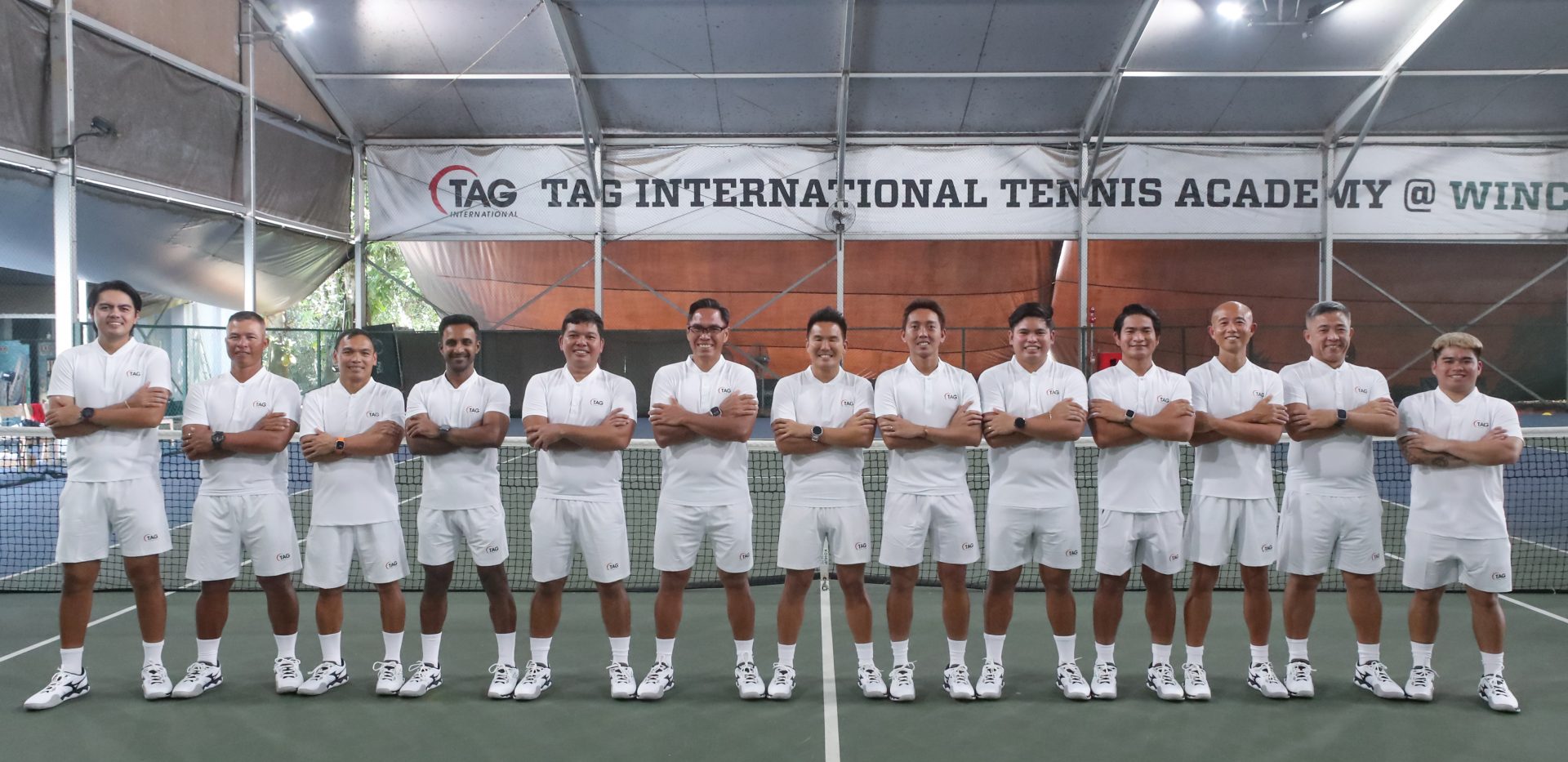
Some of the most rewarding players we coach are not beginners at all — they are adults coming back. You played in school, or at university, or socially years ago, and then work, family and life got in the way. Now the itch has returned. The good news, after more than two decades teaching returning players in Singapore with TAG International Tennis Academy, is that you are not starting from scratch. The slightly less good news is that the biggest risk for a returning adult is not that you have forgotten how to play — it is that you remember too well, and your body writes a cheque your first week back cannot cash. Here is how to come back to tennis as an adult the smart way.
Reviewed by Coach XT (Tan Xu Teng), founder of TAG International Tennis Academy, who coached Singapore’s Men’s National Team in 2018 and holds PTR Full Professional certification. He reached a career-high ITF Men’s 35+ world ranking of #56 and was Singapore’s #1 ranked men’s doubles player in August 2018 — his full playing record and certifications are published on his own profile at coachxt.sg.
You are not starting from zero
The first thing we tell a returning player is to relax: the strokes you grooved years ago are still in there. Tennis is a deeply motor-learned skill, and the movement patterns you drilled as a teenager do not simply vanish. Within a few sessions, most returners find their forehand, their serve rhythm and their footwork instincts coming back faster than they expected. What has usually faded is not the technique but the sharpness — timing, court coverage and the match fitness that let you chase a ball in the third set. That is an encouraging place to begin, because rebuilding sharpness is far quicker than learning a stroke from nothing. Your job in the first month is simply to wake those patterns up without getting hurt doing it.
Start slower than your ego wants to
This is the single most important paragraph on this page. The classic returning-adult injury happens in week one: you feel fifteen again, you sprint for a drop shot, and a calf or an Achilles that has not moved explosively in a decade reminds you that it is not fifteen. Your skill memory comes back faster than your tissues do. So treat the first few weeks as a deliberate ramp, not a comeback match. Warm up properly before you step on court — light jogging, dynamic leg swings, shoulder rotations — rather than walking straight into a rally cold. Begin with controlled rallying and gentle serving before you play points, and resist the urge to go all-out for every ball. Build your volume up week by week. The players who come back and stay back are almost always the ones who were patient in month one; the ones who disappear again are usually nursing something they did on day three.
Re-groove the strokes that have drifted
Even though the strokes return, they often come back with a few bad habits baked in — a grip that crept, a serve toss that drifted, a backhand you started slicing because it was safe. The game itself has also moved on: racquet and string technology, and the way modern tennis uses heavier topspin and more open stances, can make the game you learned feel a little dated. This is exactly where a few lessons pay for themselves many times over. A coach can spot in ten minutes what might take you a frustrating month to diagnose alone, and nudge a rusty pattern back into shape before it hardens into a permanent flaw. You are not relearning tennis; you are getting a professional to tune the engine you already own.
Rebuild tennis fitness — in Singapore’s climate
Match fitness is usually the last thing to return and the first thing to catch you out. Tennis is stop-start, explosive and surprisingly taxing on the heart and legs, and if your main exercise recently has been the walk from the car park, your lungs will protest before your strokes do. Add Singapore’s heat and humidity and the demand climbs further: hydration, pacing and playing in the cooler parts of the day matter far more for a returning adult than for a hardened junior. Ease your conditioning back alongside your tennis rather than expecting the court alone to do it, and be honest about the weather — a mid-afternoon comeback hit in full sun is how a pleasant return turns into heat exhaustion. We wrote a full guide to training safely in Singapore’s heat and humidity that every returning player should read, and it is one more reason many of our adults do their comeback sessions on our sheltered indoor courts at Winchester Tennis Arena.
Choose the right way to come back
How you structure your return matters as much as the fact that you are returning. A short block of private tennis lessons is the fastest, most efficient way back for most adults: the coaching is built entirely around your rust, your old habits and your goals, and you can book around a working week. Others prefer the social pull of a group or a regular hitting partner — which is often what keeps a comeback going once the novelty fades. Many of our returning players mix the two: a few private sessions to knock off the rust, then group play or social tennis to keep it enjoyable and consistent. If you are coming back later in life, our dedicated guidance on tennis for adults 55 and over is worth a look. Whatever the format, explore the full range on our tennis academy page and pick the one that fits your week, not someone else’s.
Why coming back is worth the effort
If you need a nudge: tennis may be one of the best things you can do for a long, healthy life. The much-cited Copenhagen City Heart Study, which followed thousands of people for around 25 years, found tennis associated with some of the largest gains in life expectancy of any activity it tracked — and researchers link much of that to the social, interactive nature of racket sport rather than exercise alone. In other words, the very thing that makes tennis fun to come back to — playing with and against other people — may also be what makes it so good for you. A comeback at 35, 45 or 55 is not nostalgia; it is one of the most enjoyable long-term investments in your health you can make.
How the right coach shortens your comeback
You can come back on your own, but a good coach compresses months of trial and error into a few focused sessions — and, just as importantly, keeps you off the injury list while you do it. A strong tennis coach in Singapore will meet you where you are, physically and technically, and build a return plan around your body rather than a textbook. Our coaching network runs deep: alongside TAG’s own coaches such as Coach Bo Alburo (ITF Men’s 35+ world No. 2), we work closely with Sanwa X and its head coach Coach Wataru Ochi, as well as former ATP-ranked professional Coach Kento Takeuchi (career-high ATP World No. 378 and an All-Japan Champion) — so a returning adult gets coaching of the same standard that develops our national juniors. And if an old injury means tennis itself feels too much at first, many of our players ease back into racket sport through lower-impact pickleball at PickleChoo before stepping back onto the tennis court.
FAQ
I haven’t played tennis in 15 years. Will it come back?
Almost certainly, and faster than you expect. Tennis strokes are deeply motor-learned, so the forehand, serve and footwork you grooved years ago are still stored — they just need waking up. What usually takes longer to return is match sharpness and fitness rather than technique, which is why returning adults progress much more quickly than true beginners.
How do I avoid getting injured when I start again?
Ramp up slowly. The common returning-adult injury happens in the first week, when skill memory outpaces the body — a cold sprint for a ball strains a calf or Achilles that has not moved explosively in years. Warm up properly before every session, start with controlled rallying before playing points, build your volume week by week, and in Singapore’s climate play in the cooler hours or on an indoor court.
Should I take lessons or just hit with friends?
A short block of private lessons is the most efficient way back for most returning adults, because a coach can quickly diagnose the habits that crept in and re-groove your strokes before they harden. Many players then mix in group or social play to keep the comeback enjoyable and consistent. The combination — a few lessons to fix the rust, social tennis to keep it fun — works best.
Am I too old to get back into tennis?
No. We coach returning players well into their fifties, sixties and beyond, and tennis is one of the activities most strongly associated with a longer, healthier life. With a sensible ramp-up and coaching built around your body, there is no age at which coming back to tennis stops being worthwhile.
Related reading
- Private tennis lessons in Singapore — one-on-one coaching that comes to you
- Tennis for adults 55 and over — a complete guide
- Tennis in Singapore’s heat and humidity: a coach’s guide
Thinking about picking the racquet back up? WhatsApp us at +65 9029 8400 and we will build a comeback plan — the right coach, format and court — around where you are today.
